5 Shiny Books with Tim Devin
"Utopia spreads its seeds far and wide."

Welcome to Lines of Flight, a space for folks to share books that have inspired them, changed them, radicalized them, etc. In some cases the books shared here are not people's most favourite books of all times, but rather 5 SHINY ones to talk about right now! And, there is always a caveat of: this list is in motion and is not exhaustive.
Below is a joyous curation by our friend and zinester Tim Devin!
Hi, my name is Tim Devin (he/him), and I'm an artist and a writer. I am also a proud-self publisher, and run a zine press called Free the Future Press. I was really excited that carla asked me to write some reviews, since recommending books is one of my favorite things ever. Here are a few older and newer things that have been really meaningful to me. I hope some of them sound interesting to you, too!
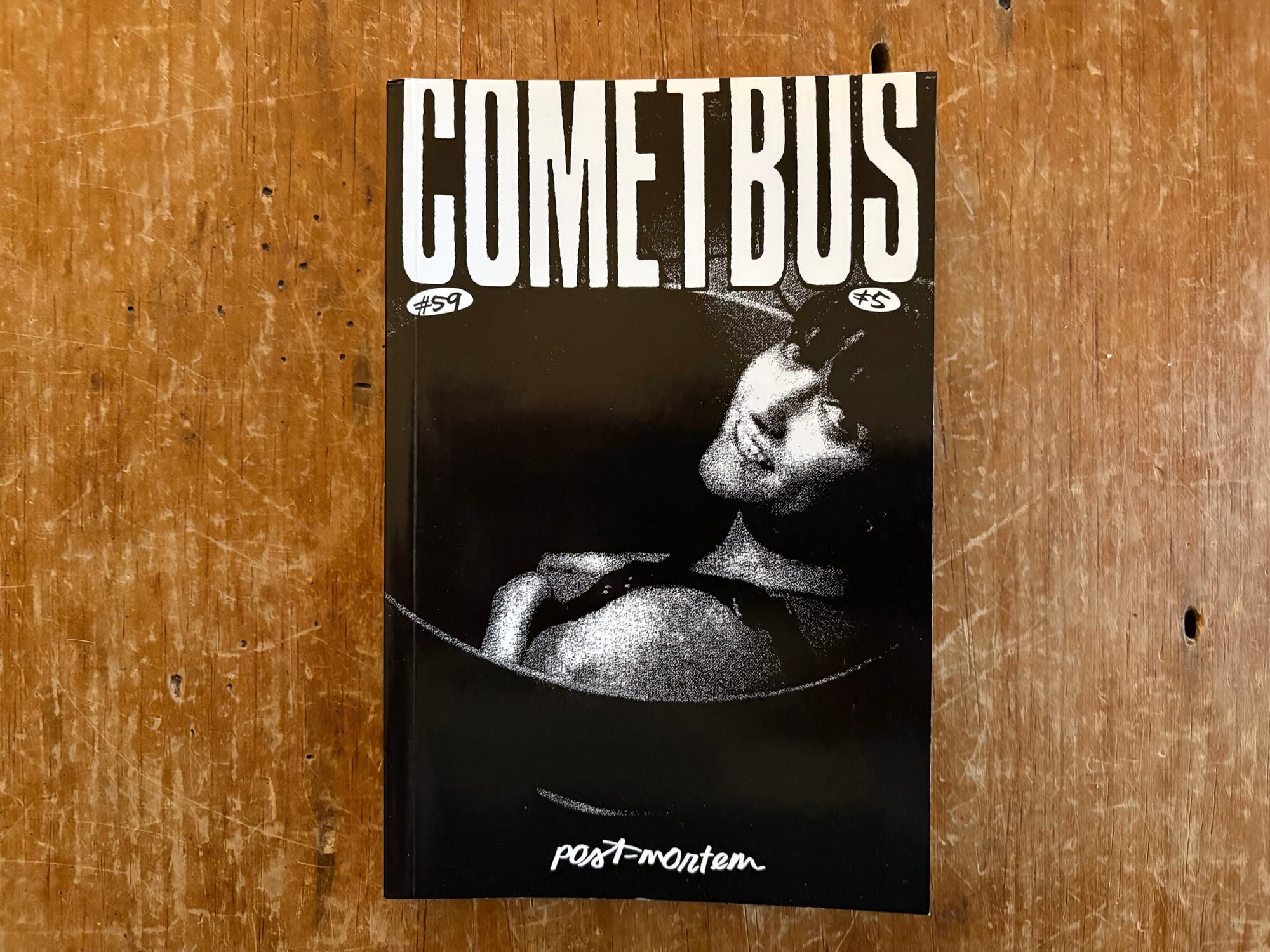
“Post-mortem” by Aaron Cometbus (Cometbus #59, 2020)
For the final issue of his long-running zine, Aaron Cometbus traveled across the country, interviewing people involved in underground and anarchist institutions– from C Squat, to Interference Archives, Thrasher Magazine, and Left Bank Books– learning what made them tick, and how they had succeeded. Or failed. It’s a fascinating peek behind the curtains of a lot of institutions that are important to so many of us.
“Not everything has to be long-term,” Aaron tells us. “All good things naturally come to an end. But they should be maintained–and concluded– with dignity and idealism, the same way they began.” In other words, there’s only so much compromising you should do before it’s best just to pull the plug. Which I’m going to assume is also an explanation of why he stopped writing his zine.
As with every Cometbus issue, this one is thoughtful, and doesn’t pull any punches. It clocks in at 139 pages, which sort of stretches the definition of a zine, for sure– but it’s available through a number of zine distros, and you should be able to find a copy at your local zine library.
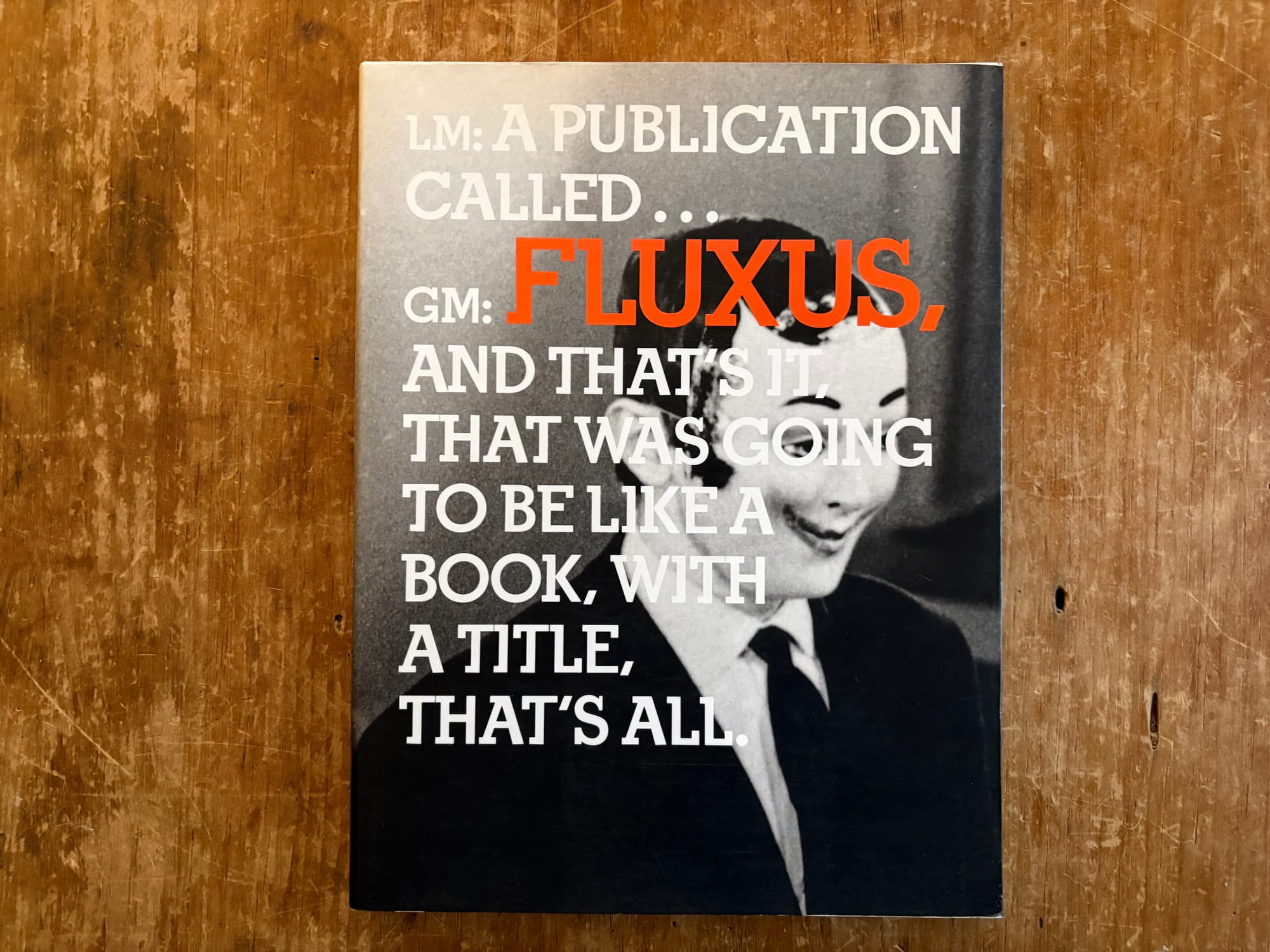
“In the spirit of Fluxus” by Elizabeth Armstrong and Joan Rothfuss (1993)
Fluxus was a loose, anarchic group of artists who explored a dozen art forms at a time when artists were expected to focus on just one. During their chaotic performances, they destroyed pianos, or led bizarre walking tours through the streets of Manhattan. Their well-known “instruction art” presented strange instructions that viewers could follow, if they chose. And their DIY publications and art objects were available for reasonable prices through their mail order catalog.
In the 60s and 70s, “serious art” was pricey and elitist, so Fluxus was definitely a reaction against that– an attempt to erase the boundaries between art and daily life, and to democratize art and art-making in the process. They did it all with humor, and a liberatory framing that might feel familiar to us.
I found this book in the library when I was going to college, and it completely changed how I wanted to make art. I actually saved up and bought my own copy. This book is a joy– full of photos and fascinating essays about their art. You should be able to find it if you have access to an academic library. If not, any book on Fluxus will probably be good.
“A we without a state” by Yasnaya Elena Aguilar Gil (2025)
This short book presents translations of three influential essays on Indigenous autonomy by Mixe activist Aguilar Gil. “The goal I am proposing begins with imagination,” she writes. The goal? A world in which power is wielded by small, autonomous communities that support each other as needed. To make that happen, she calls upon Indigenous people to stop pledging allegiance to nation states, which are unnatural and inherently toxic.
Aguilar Gil likens this vision to the traditional way of growing corn–in which different plants sprout up next to each other, and are healthier for it–and contrasts it with capitalism’s monoculture, which she says is an herbicide that kills diversity, and pushes people into unsustainable and unsafe ways of living. She points out that, whenever there are disasters, communal autonomy sprouts up again, while capitalism and the state founder.
Her writings are widely read across Mexico, even influencing the National Indigenous Congress–which is no stranger to radicalism itself. (The NIC was a brainchild of the Zapatistas). These essays initially appeared in El Pais, which is one of the newspapers of record for the Spanish-speaking world. It’s hard to imagine such radical writings appearing in the New York Times.

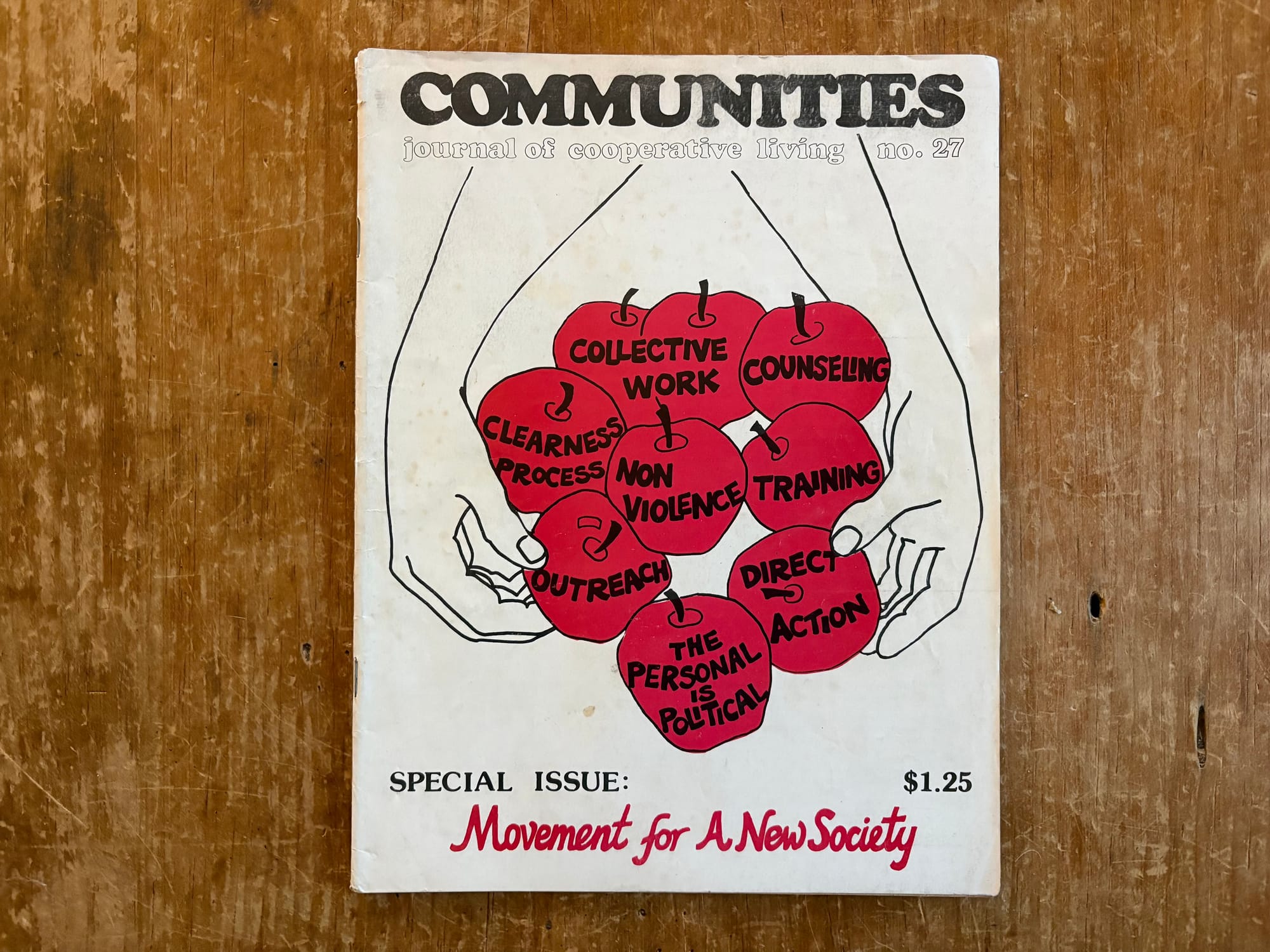
“Communities magazine” (issues from the mid to late 70s)
This long-running magazine has gone through a number of phases. When it started in the early 70s, it covered rural communes; these days, it focuses on permaculture, and so-called intentional communities. In the mid to late 70s, it expanded its coverage to include urban movements– news on communes for sure, but also long, fascinating articles on anarchist groups like Movement for a New Society, and urban squatting (which was known as “urban homesteading” at the time). There’s a lot of fascinating stuff hidden in these old mags, for sure. Utopia spreads its seeds far and wide.
Controversial point: it’s interesting to see how much common cause hippies and anarchists found back then. Controversial takeaway: what unlikely common cause could we find with other groups these days? The original mags are a little hard to find. I was able to score a bunch at a bookstore, but you can find them in libraries, and online as PDFs.
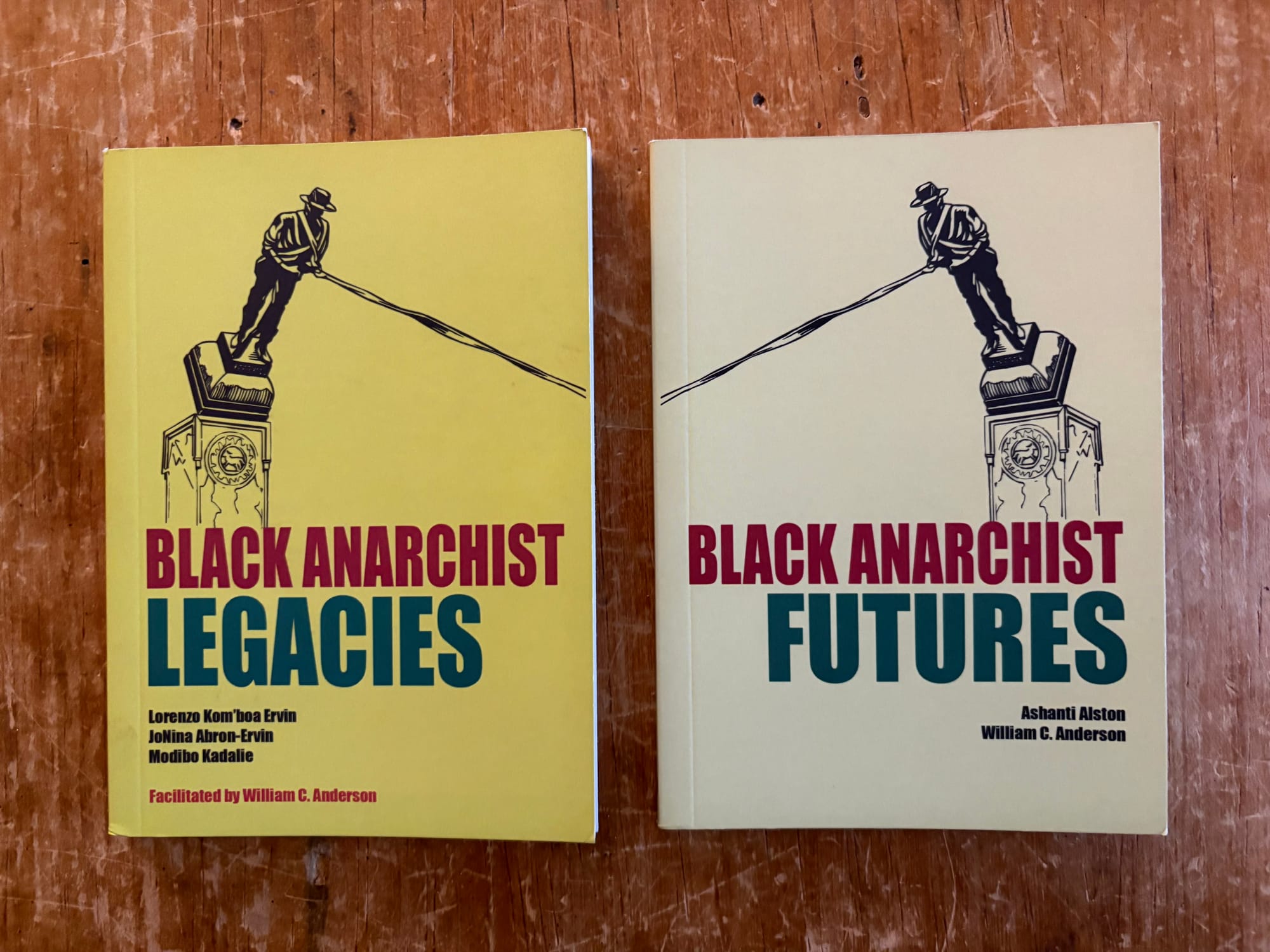
“Black anarchist legacies” and “Black anarchist futures” (2025)
These two short books came out at the same time, so I’m recommending them both in one go. They’re transcripts of discussions between William C. Anderson and Black movement elders, which took place at the 2023 Institute for Social Ecology conference on “Social Ecology and the Black Radical Tradition.”
Futures is a convo between Anderson and Black Panther veteran Ashanti Alston, while Legacies features Anderson talking with Lorenzo Kom’boa Ervin, JoNina Abron-Ervin, and Modibo Kadalie. If you don’t know those names, they’ve produced a bunch of books you should consider tracking down. In particular, I loved Kadalie’s Pan-African Social Ecology.
Their conversations cover a range of fascinating topics: What led them to anarchism. Black anarchism as it relates to, and differs from, other expressions. Critiques of movement nonprofits and authoritarian organizing. They also have a long discussion about anti-Black racism that they experienced in various white anarchist settings, and talk about the fact that many Black people are resistant to anarchism, because they think of it as a white movement. All of which makes Alston’s statement about anarchism helping people find their blind spots hit less like praise, and more like sage advice. Gripping stuff.
Like the Aguilar Gil book, these books were put out by Active Distribution, which is really on a tear lately. Support them–they’re doing great work.