Consent in Conversations About The Latest Horrors
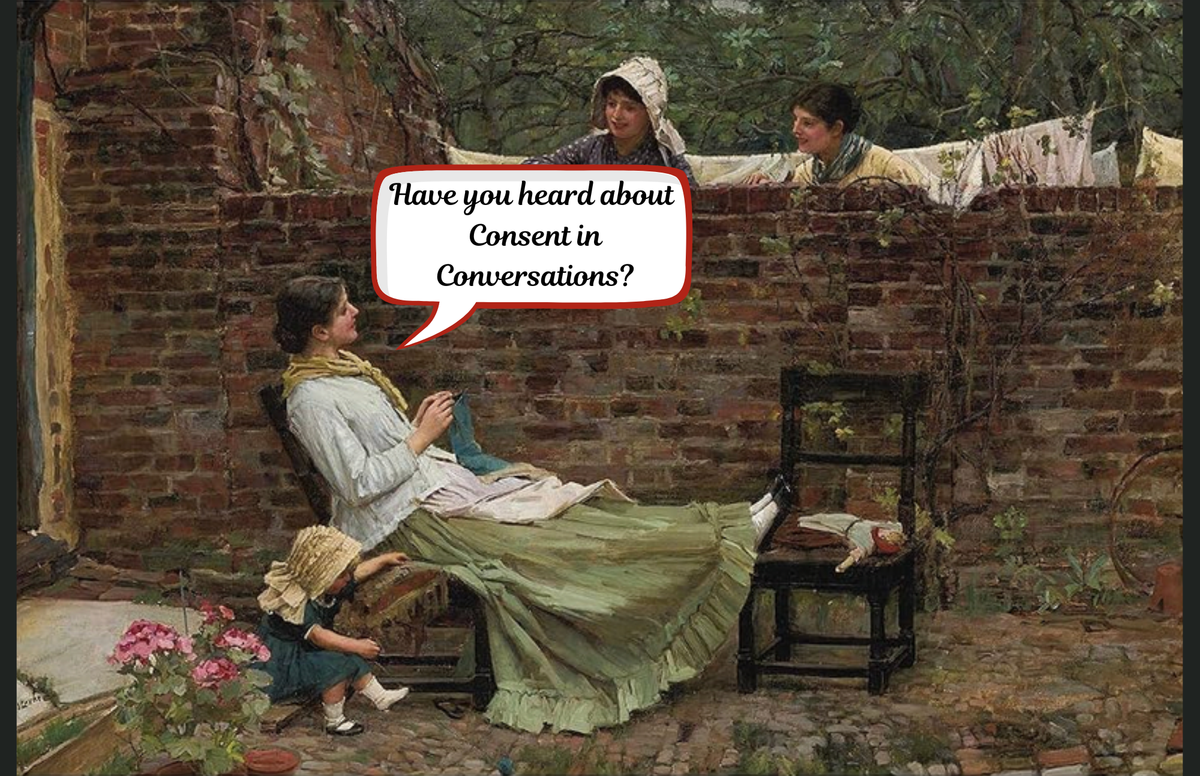
on behalf of survivors everywhere, ALWAYS ask for consent before unloading the details of the latest sexual violence details on people in your life.


NB: some content warning, below there are potential trigger topics being discussed, a bit of a screed, and we also offer some Do’s and Don’ts…
We’ve really struggled with how to start this piece. We started discussing this topic a year ago and each week the news gets worse and none of us need a rehashing of the latest horrors…
Our process: We start writing a little bit. We get triggered and take a break. The news cycle rolls on through horrific details of genocide and climate catastrophes and more. We try to regulate and keep engaged with our activism, our communities, our physical and mental well being. Then another story dominates newspapers and social media and the cycle starts again.
We know that you know that IT IS A LOT.
The onslaught of news about the Cornell Case, Gisèle Pelicot, Epstein Files, Cesar Chavez, Neil Gaiman, and even a rich predator in a nearby (to Dani) town and his high profile assault case dominating the news for weeks and months is overwhelming; everyone is triggered, everyone has opinions, and everyone, it seems, feels entitled to regurgitate the details of others’ traumas, even in casual settings.
Students during break and after class, acquaintances in line at the coffee shop, parents in line at the grocery store, women changing in the locker room in the gym. They’re all mouthing off, the shock of it evident in the pitch hanging on their words. The collective fem-rage is palpable. We’ve heard it all. Except for people actually asking for consent before unloading their thoughts onto anyone who will listen.
“Can you believe what they did to those girls?”
“Did you read that article? DID YOU READ IT?!?!”
Are people actually shocked? If so, who are these people? I mean, we don’t want people to become desensitized or numbed out– or to accept that this is how things are–but who is still surprised by the actions of cismen with any sort of privilege or power at their disposal? And, by the way, no we don’t just mean the very rich/ billionaires/or “epstein class” (like what the fuck does that even mean?). In fact, when it comes to this, it is yes all cismen, in the same way that it is yes all white people when talking about white supremacy and racism.
With so much accompanying talk about consent swirling around the horrible sexual violence stories we keep learning about, we thought it might be good to remind folks to also ask for consent when talking about these cases (really, an entire ongoing endemic crisis), with friends and strangers alike.
The Me Too movement flooded conversations with unwanted details of other people’s most horrific experiences and the floodgates continue to flow freely, with intermittent surges dominating social media. There’s a trauma-porn adjacent tone when a lot of this stuff gets brought up by non survivors, and it’s triggering as fuck for folks who are survivors.
Let us say that again:
It’s triggering as fuck for folks who are survivors.
And it’s rage inducing for everyone who loves survivors.
It's complicated (and it's not) because the rage is righteous; from posts on hexing the Cornell 7, to therapists sharing tips on self-regulation, and validating survivors’ responses and experiences through reels on Instagram. And an onslaught of survivors coming out of the closet to share their own experiences and casting away shame in the process. Mostly, we love to see it. Trust us, we too feel the rage, and as Gen Xers who grew up in a time when it was still expected to be silent about our sexual abuse and assaults, we so get it. Gossip saves lives. So, post away!
And, here’s the thing, many survivors need to compartmentalize the news and the heinous details that accompany it. Many still need to go to work, go into the world and buy groceries, volunteer in their kid’s classroom, support a friend who is dealing with trauma, etc. Many are dealing with other traumas, too: systemic racism, transphobia, barriers to healthcare, generational trauma, living under fascism and capitalism, and the list goes on. Many survivors need to reserve their meltdowns until the therapist office or in the home of a loving, supportive friend with capacity to hold the pain. It takes an incredible amount of strength and energy to ward off the anxiety when bombarded with details day after day after day. Each of us can make the choice to stop scrolling, to take care when we feel we are being triggered. But in person interactions are harder to stop.
So please, on behalf of survivors everywhere, ALWAYS ask for consent before unloading the details of the latest sexual violence details on people in your life.
This short starter list of do’s and don’ts comes from two Gen Xers who have a battlecry of “Don’t Tell Me What To Do,” so y’know, take it from that place:
DO assume that most of us have dealt with some kind of sexual abuse/assaults
DON’T put your friends in a position of asking you to shut your trap
DO ask your survivor loved ones what they need
DON’T get annoyed if they don’t quite know what they need
DO give us time to avoid socializing, and please avoid dumping a bunch of related or unrelated stressors about your job, relationships, etc on us. Again, we are really, really tired.
DO offer tea or treats or a walk or movie date or a conversation about anything but SA
DO ask your friends, colleagues, comrades, family (even if you just want to rant via text): Do you have capacity to talk about the news?
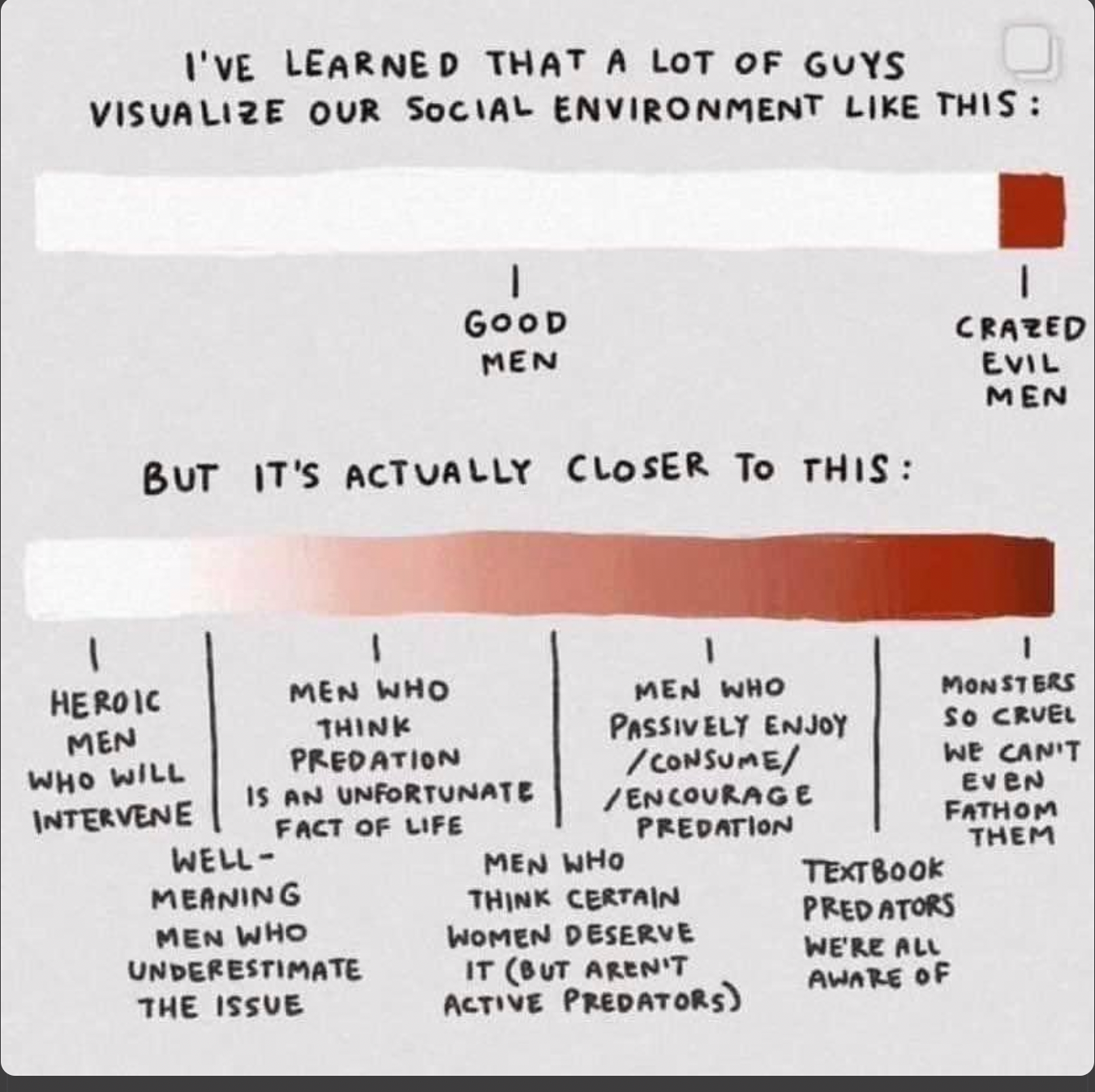
FOR CISMEN
(note: we understand that cismen can experience sexual violence, too, but we made this list based on the fact that 93-98% of these crimes are committed by cismen):
DON’T gush on and on about how horrified and surprised you are when talking to survivors (note: we are NOT surprised, but we are triggered, and really, really tired).
Instead:
DO call your bros out any time they say something fucked up (or even just annoying).
DO start conversations with other cismen about it, ask them how they are supporting the survivors in their lives.
DO talk to your therapist about how to process what’s coming up for you when the survivor(s) in your life are triggered (note: it is sometimes way too much for survivors to hold your discomfort along with their own trauma)
DO keep in mind the latest horrors dominating the news cycle and understand that maybe the survivor(s) in your life are extra tired, moody, antisocial, angry, distant, etc because of said news cycle.
DO ask survivors what they need.
And so, you might be thinking: But, I need to process the horrors of the [most recent nightmare] somewhere! That’s not a bad impulse to have but, again:
DO ask for consent first, and/or ask your nearest and dearest if they have ideas on who you could talk to.
There are many more ways to acknowledge the trauma and ask for consent before diving into the details of the latest horrors… what are some of yours?

Creating a culture of consent in conversations
Consent is an every day practice and we know that it begins at home, including learning and doing conversational consent. There are scores of books (and posts!) out there telling us how to teach children consent, and the importance of raising boys who don’t become misogynists and abusers, but what they often fail to do is look at the actual experience that kids have. To say that non-consent is learned at home where it becomes embodied is not hyperbolic! To echo bell hooks, “...the most common forms of patriarchal violence are those that take place in the home between patriarchal parents and children." And by the patriarchal parent, hooks was speaking to all adults (not just cismen) pointing to how all of us wield our adult supremacy over children. Meaning: children for the most part live a very non-consensual life — especially when it comes to bodily autonomy! Kids also have very little to no power on what is being said to them and near them, therefore they are privy to all sorts of conversations happening around them, making non-consent in conversations normal.
We all have different tolerances for hearing all sorts of conversations and so by deploying a practice of consent in conversation, by being careful and thoughtful with how we talk with each other is foundational for creating better worlds. No matter who you live with, or spend the most time with: these are good places to practice conversational consent (including over texts!). For instance, in our multi generational homes we aspire to have a solid practice in pace of asking for consent before we have a potentially triggering conversation with each other, and part of this is sharing accountability when things go the other way. And it will. Because we all have the potential to fail at remembering to ask first. We are often hyped up after doom scrolling and in this adrenaline post-scroll-state we can forget to ask and just start processing a brutal news story — but luckily someone else usually speaks up to remind us to ask for consent before going on and potentially causing harm. In short: if the culture of asking for consent first is in place, this solidarity can flow much easier.
Just keep trying. Begin again. Be intentional, pay attention, trust survivors, and listen more.
“We keep us safe” very much includes how we have conversations.
So. please, on behalf of survivors everywhere:
ALWAYS ask for consent before speaking about potentially triggering topics!
love and solidarity,
Dani & carla joy