Hearthing Devotion
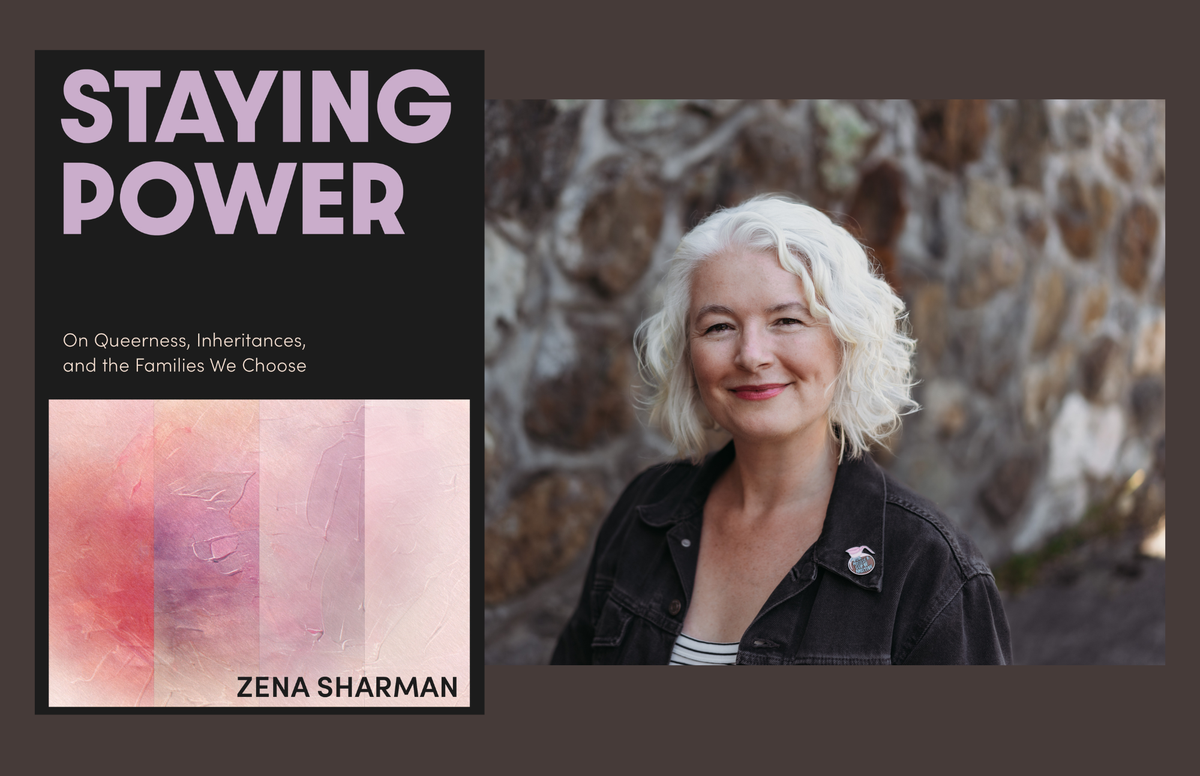
An interview with Zena Sharman about her memoir-in-essays, Staying Power: On Queerness, Inheritances, and the Families We Choose
Nb: This interview with Zena was created for an upcoming zine about Hestia, the Goddess of the hearth and the home. Below is the longer version of that interview.
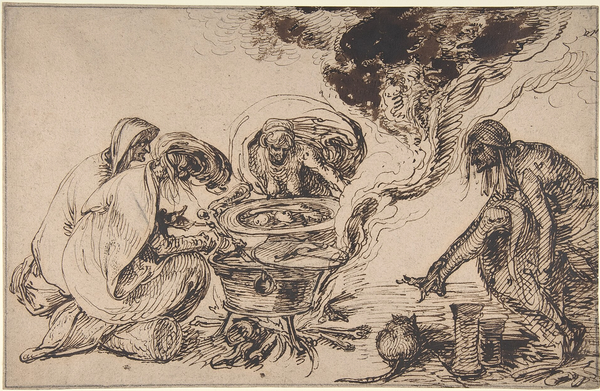
I began thinking about Hestia by removing the veil of empire (aka cisheteropatriarchy, et al) from the mythos of her and the other goddesses and witches of her time. This allowed me to imagine and weave together different stories about them. I wanted to think about Hestia being part of deep bonds of interdependence with her chosen family and kin, a devotion infused with mutual care and radical love for each other. So, while remunerating on what to write I was also reading Zena Sharman’s new incredible book, Staying Power: On Queerness, Inheritances, and the Families We Choose. It was a portal experience in many ways! Zena’s memoir shares stories of world making that connected to my thinking about Hestia. Staying Power is stunning – a beautiful, queer, messy, erotic, and profoundly vulnerable world and kin making book. The serendipitous timing felt like a witchy intervention, or a timeweaving to be sure, because while the book is over all situated in our shared material now, Staying Power also stretches across many times. With Zena’s careful curation and embodied doula practices, it will hold you and inspire you to consider your own stories of loss and belonging, and perhaps start your path towards learning how to stay.
carla: what are some of your aspirations for Staying Power, and who did you write it for?
Zena: One of the ways I connect with Hestia is through a devotion to creating atmospheres of hospitality and community-building. The hearth is a place of warmth, abundance and nourishment. It’s also a place of ritually marking births and deaths.
As a writer who is also a death doula and hospice volunteer, hospitality and hospicing are foundational to my ethic of care. I brought this ethos to Staying Power, which I hope will be a space of refuge for readers seeking the relief of knowing they aren’t alone in their experiences as grievers, parents, queer people, descendants of complex families or because their relational and erotic lives defy norms. I want readers to feel seen by reading my memoir—to be welcomed into their own messiness and vulnerability by bearing witness to mine.
Staying Power is also an offering to my younger self. It’s the book I needed in 2014 when my mother died. Writing a memoir is a form of time travel, so I like to imagine myself reaching back into the past and giving a copy of it to the version of me who felt shattered by grief and was desperate for stories that would make her feel less alone.
carla: What are your core questions and joyful threads that run through your work, including your consulting and in community work?
Zena: The questions at the heart of my work are “How do we create change?” and “How do we care for each other?” The how is a crucial part of these inquiries. I’m drawn to process, practice and praxis. Studying care for more than twenty years has made me increasingly preoccupied with understanding how we strive—and often struggle—to put our values and political commitments into practice in our everyday lives, and what we learn when we keep trying.
After editing two anthologies on queer and trans health and community care practices, Staying Power was an attempt to give readers a more intimate view of my own care praxis. My intention wasn’t for readers to come away from my memoir with the impression that I have all the answers. It was to invite them into the questions with me by showing them some of what care and interdependence look like in my life, as well as how my relationships to care and interdependence have changed over time.
I’m drawn to edges, thresholds and portals—grief and death, certainly, but also the liminal spaces, states and experiences in which we might feel unsettled, ecstatic or connected with something larger than ourselves. These are sites of transformation. I’m interested in understanding both how we might cultivate and co-create them, as well as what they can teach us about how and why we change.
carla: I would love to hear about the process of choosing an essay style memoir for Staying Power? Especially since it's a bit of a departure from creating anthologies! (which by the way, are all incredible and indeed share some themes and everyone ought to read them too!) Also, I loved that there was speculative nonfiction woven into Staying Power, too — is this how you would talk about it?
Zena: I have an affinity for curation. I love gathering things—ideas, stories, images, poems, songs—for the pleasure of sharing them with others. In an earlier season of my creative life, I hosted campus radio shows and produced and emceed queer dance parties and cabarets. The people closest to me today know that sharing books and resources is one of my love languages.
I edited three anthologies before publishing a memoir, so it makes sense that Staying Power ultimately took the form of a memoir-in-essays. Essays are fun and satisfying to write—they allow me to play with shape and structure, and to lean into my love of research without being constrained by it. They also give me greater control over the width of the aperture I offer readers into my life, which is important to me as someone writing about my young children.
The closing essay in the book uses speculative memoir to imagine a present I wish were possible. It’s evocative of a practice called “remembering the future” that I learned in a Reclaiming Witchcraft context. As a memoirist, it gave me an opportunity to offer my past self the grace of a do-over for something I wish I had been capable of while my mother was alive.
carla: Why was it important to share stories of the erotic and messy alongside stories of making family?
Zena: My commitment as a memoirist is to write toward the truth, and against respectability. A friend who read multiple drafts of my memoir said it got hornier with every draft. At first it felt risky to juxtapose stories from my own erotic life with an account of queer parenting, especially given the contemporary sociopolitical climate, but I soon realized the erotic was integral to an honest account of my experiences of grief and queer family-making.
I consider myself part of a lineage of queer femme writer-activists who see their gender expressions and sexualities as part of a larger liberatory project. Several of the authors whose work was formative for me when I was first coming out more than twenty years ago died while I was writing Staying Power. Here I’m thinking of beloved ancestors Dorothy Allison, Amber Hollibaugh and Minnie Bruce Pratt. Femme elder Joan Nestle, who is eighty-six, is still living and gave her last interview in 2025.
I revisited Allison, Hollibaugh, Pratt and Nestle’s writing while working on Staying Power and was struck by how unabashedly erotic it was, and how overtly political. It was they who gave me the courage—and more than that, a sense of responsibility—to offer readers a fuller and more authentic story of who I am.
Messiness is part of this. I didn’t want to offer readers a neat story of how I went from being a single woman convinced she would never have kids to becoming part of a four-parent family. I wanted to give them a window into my gradual and ongoing process of learning to embrace interdependence without pretending there aren’t still parts of me that chafe at the messiness and intimate proximity of it all.
carla: I am curious why at this point you focused on your journey of learning how to stay? and also the power of staying?
Zena: Staying Power asks “If leaving has helped you survive, how do you learn to stay?”
I’ve long identified as someone with an affinity for flight. This might look like leaving the building, exiting the room or mentally checking out when I feel overwhelmed or activated. It has sometimes looked like leaving a relationship, like when I chose to walk away from my marriage seven months after my mother died.
Writing my memoir made me more aware of, and grateful for, my capacity for flight as a survival strategy and a precious inheritance from my mother, a trauma survivor who fled violence throughout her life. It also made me more compassionate toward the parts of me that scream “RUN!!!” when deep down they want to turn toward intimacy, connection and belonging.
I grew up in a two-person family with just my mother and me. Today, I live in a seven-person household with my partner, our two co-parents and our three children. I’m part of a broad and dense web of relationships with friends and chosen family that extends far beyond my domestic sphere. My life is highly interdependent, which I mostly love and sometimes find challenging.
Staying Power is an inquiry into what’s enabled me to move toward a way of living that’s far more interdependent than anything I could ever have imagined for myself, even as someone who came of age in radical queer communities with expansive practices of kinship and ways of relating to each other.
I’m interested in what staying asks of us, what aspects of it we find pleasurable and where we encounter friction, and what staying makes possible. I’ve come to understand myself not as a person who is habitually running from connection but as someone who is learning to stay. The “-ing” is crucial here—staying is a process, a practice, a commitment and an everyday choice.
carla: How do you define interdependence? I would also love to hear some of the ways it plays out in a multigenerational home where collective parenting and relationship anarchy is at the heart of it all?
Zena: I’ve been thinking with Akemi Nishida’s concept of “messy dependency” since I first read her book Just Care in 2022. Interdependence is a foundational principle of disability justice and a fact of life for us all. Yet Nishida found in her research that we sometimes have a tendency to conceptualize interdependence as a clear-cut reciprocal exchange.
Messy dependency challenges this tendency by accepting—and indeed, embracing—how dependency can be messy, risky, scary and unpleasant, as well as being a site of intimacy, pleasure, connection and world-building. One of the things I love about messy dependency is how Nishida frames it as a desire to be cultivated, without the expectation that the only way to do so is by evacuating the mess from our relational intimacies.
Desire is messy! Relationships are messy! Being a human is messy! If I’ve learned anything from sharing a domestic life and a household with six other people, it’s that it’s going to get messy. That mess can be physical—I no longer live alone in my pristine recently-divorced-single-lady apartment—or embodied. My everyday life involves a lot more sticky substances of unknown origin, butt-wiping and germs than it did before I started living with three adults and three kids.
The biggest messes are affective and relational, though. We’re always leaking feelings, needs and vibes all over each other, whether consciously or not. Sometimes the messiness is inside me as I rail against my own dependency or what happens when someone else’s rubs up against mine, and sometimes it's between us as we navigate the conflicts and challenges of everyday life. This can feel hard but it’s also generative, and it compels me to keep growing.
Your work has been so influential for me in thinking about how adult supremacy factors into all of this. Parenting is a continual test of my capacity to live my values in my everyday life. I remain in perpetual inquiry around how I can disrupt the power relations that adhere to my role as a parent in relationship with the three children in my family. The coercive and power-over tendencies that stick to adulthood make things even messier in relationships where children are dependent on us for their survival.
I’m grateful to my mother for modeling a profound respect for children in how she parented me, and to my children for everything they’re teaching me about how to be in loving, respectful and solidarity-based relationships with them.
carla: what are some of the ways witchiness is part of your life, and how does magic animate your day-to-day?
Zena: There have been seasons of my life when magic and witchcraft were a more prominent part of my practices. Staying Power documents one of those seasons, including how my partner and I hooked up and accidentally cast a love spell at BC Witchcamp! I miss the pre-COVID era when I felt safe participating in the kind of large community rituals and gatherings that often happen indoors.
Magic is woven into my life in small yet intentional ways today, like the ancestor altar beside my writing desk or my practice of pulling a tarot card on every new and full moon. I also think of writing books as a kind of spell-casting. I sought support in creating an ancestrally-held container for the familial truth-telling and intergenerational trauma work I knew my memoir would call me to do.
As someone approaching fifty, I’m interested in what it means to be aging into olderhood—and perhaps elderhood, though I don’t think of the latter as a label I can bestow on myself so much as one I must show myself to be worthy of in my relationships and communities.
My role as a volunteer grief companion at my local hospice feels both countercultural and sacred. Countercultural in the sense that, in a grief-avoidant culture, to bear loving witness to another’s grief is a challenge to the messages telling us to “get over it” and “go back to normal,” as if there’s ever a normal to return to after loss. It’s sacred in the sense that it’s a profound gift to be entrusted with another’s grief.
I want to be part of creating communities where we’re each supported to show up in our brokenheartedness and can trust that we will be held with reverence and care.
*
Zena Sharman is an essayist and non-fiction writer whose work explores themes of community, identity, and care. She is the editor of several anthologies, including The Care We Dream Of and the Lambda Literary award-winning The Remedy (both Arsenal Pulp Press). She co-edited Persistence: All Ways Butch and Femme (Arsenal Pulp Press, 2011), which was named a Stonewall Honour Book and nominated for a Lambda Literary award. Zena's writing has also appeared in Room and Xtra Magazine. Staying Power is her debut memoir.